

An Unexpected Alignment
Glenn Ligon, Beauford Delaney, and Baldwin’s blue

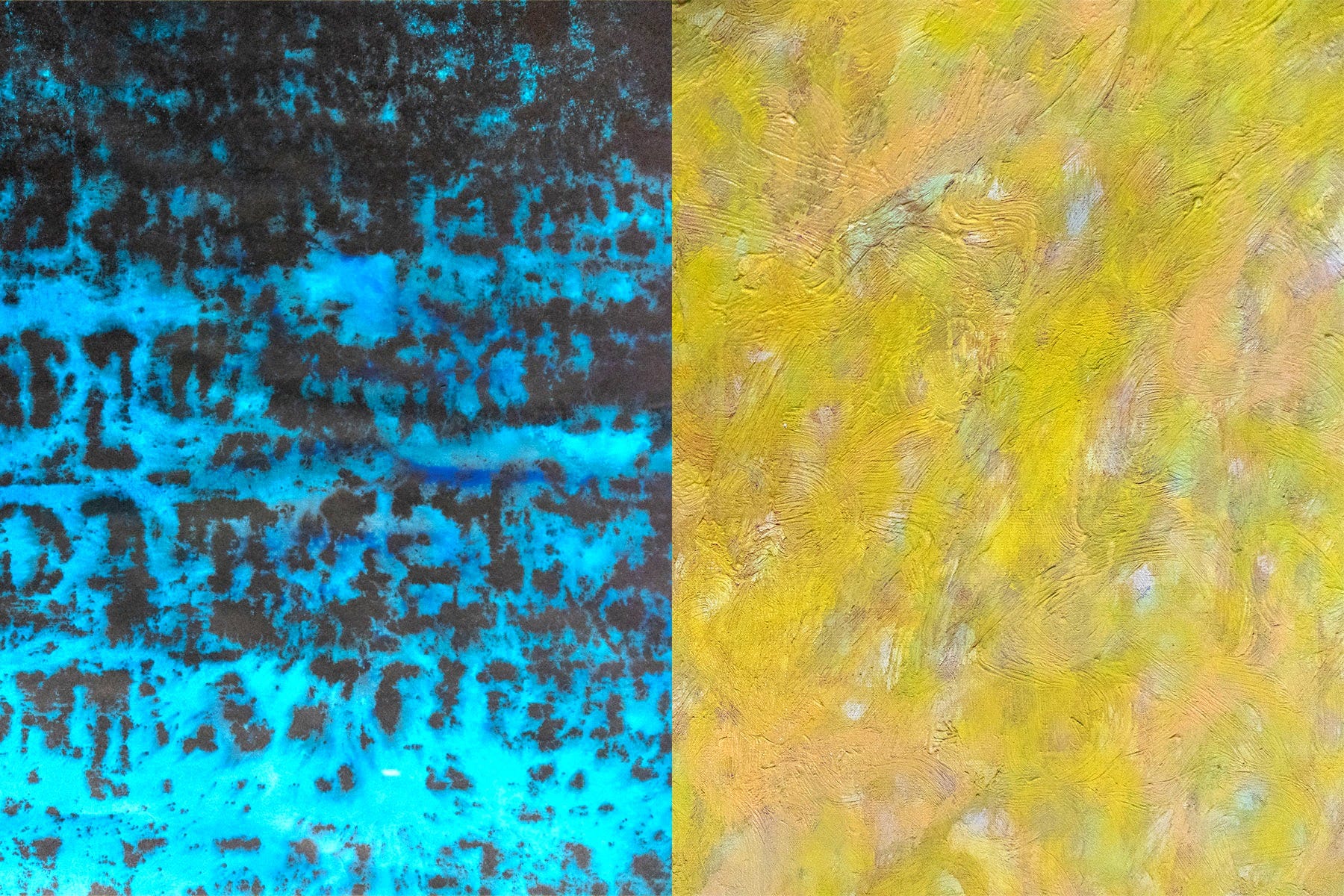
I found myself listening in on a conversation between Glenn Ligon and Beauford Delaney, one that only came into being in the space between two galleries.
At Hauser & Wirth, I stood before Ligon’s large blue-black works on paper, their surfaces dense with language and its undoing. Text pressed into the fiber, then dragged, blurred, submerged. It was not quite gone, but no longer fully available. Reading gave way to looking—or perhaps to watching, like stone worn down under a steady current. Not disappearance, exactly. Erosion.
At a certain point, words stop functioning as language. They remain present, but they no longer deliver meaning. Instead, they accumulate as surface: history, repetition, pressure. What remains is a residue. A record of use.
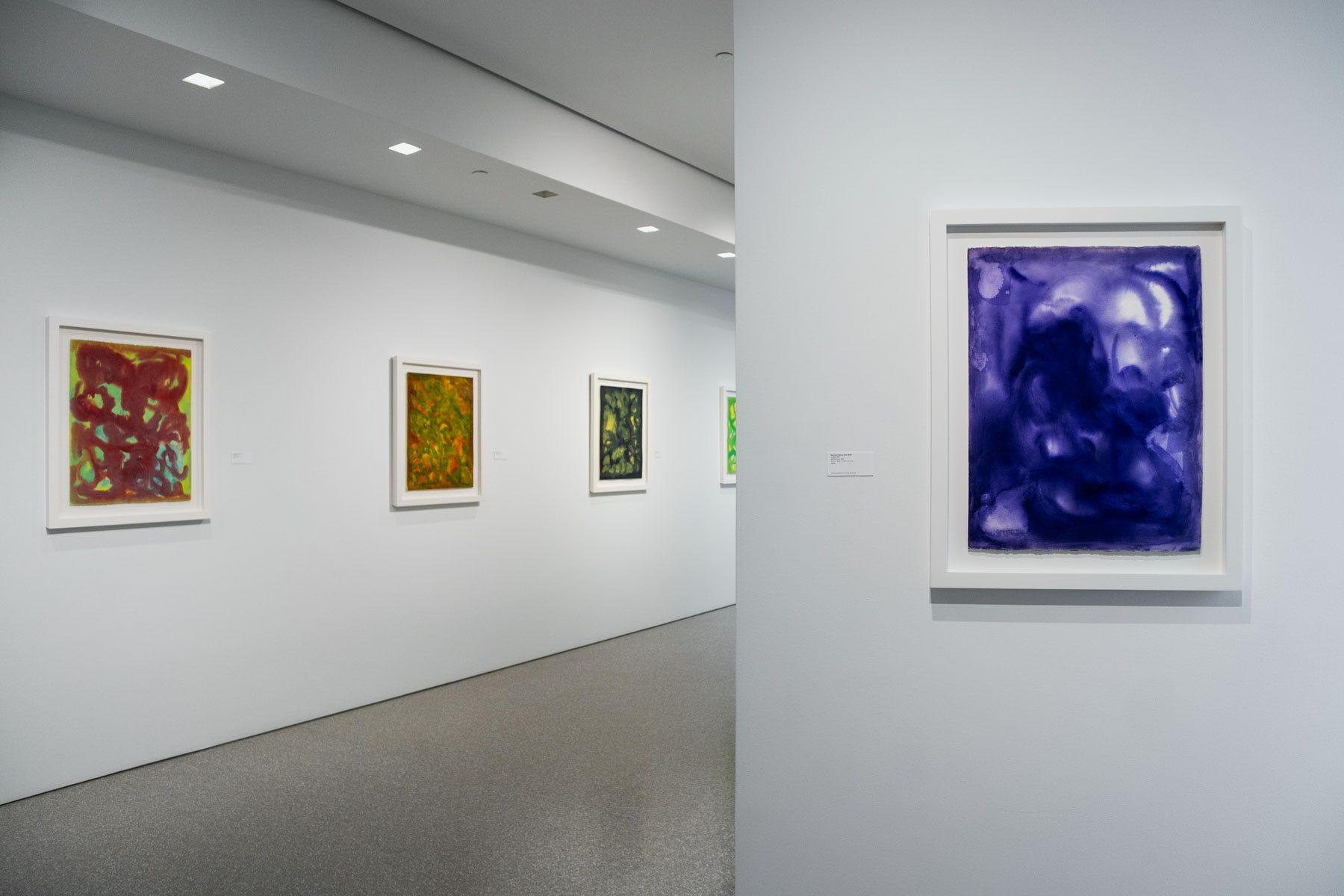
Later, at Michael Rosenfeld Gallery, I encountered Delaney. The shift was immediate, but not disorienting. Light moved across the canvas in fields, building and dissolving at once. There were no literal objects to hold onto—no faces, no bodies, nothing to anchor the eye in recognition. Only color, pressing outward.
And yet, the same instability remained.
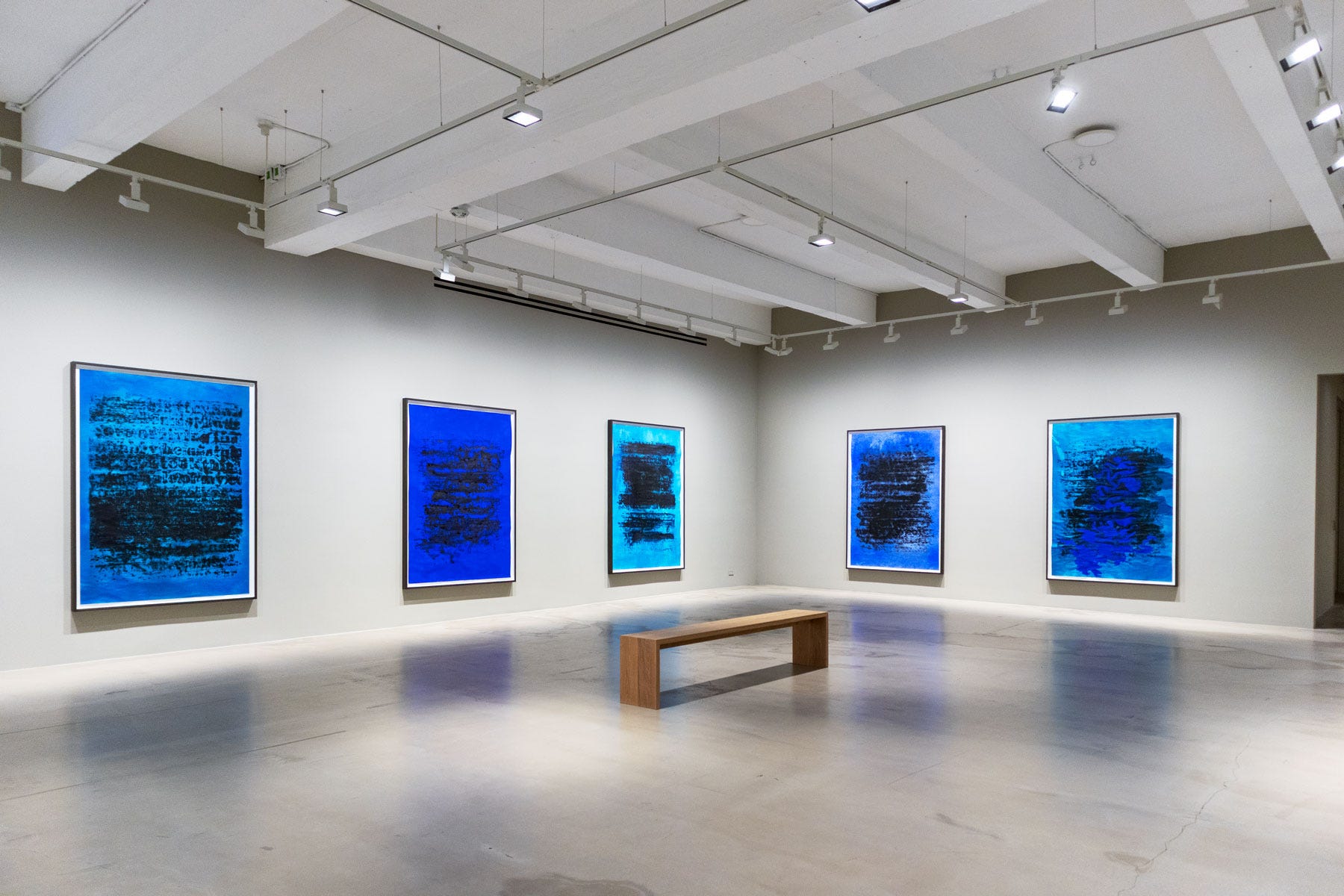
I wouldn’t have thought to place these two in dialogue. The distance between them—temporal, formal, methodological—seems to resist it. Ligon begins with language, with text carrying the weight of citation and history. Delaney begins with light, moving toward something less fixed, less nameable. One works through the accumulation and breakdown of words; the other through the diffusion of form.
And yet both arrive at a condition in which legibility falters.
In Ligon, language is pushed to the point of exhaustion. The text remains, but it resists extraction. It thickens, darkens, refuses to be read. In Delaney, form has already given way. Whatever might have been there has dissolved into light. What remains is atmosphere—felt more than grasped.
Erosion and illumination; appearance and withdrawal.
In the space between these two encounters, what became clear was not a direct lineage, but a shared approach to instability: a way of working that accepts that history, identity, and the self cannot remain intact under pressure. They will blur, dissolve, or exceed their own boundaries.
In both cases, visibility is not straightforward. What is shown is also withheld. What is present resists being fully known.
It was only later that I learned this conversation wasn’t incidental.
The title of Ligon’s exhibition—Late at night, early in the morning, at noon—was borrowed from James Baldwin. It comes from a 1964 introduction Baldwin wrote for a Delaney exhibition in Paris, recalling a window through which “everything one saw… was filtered through leaves.” He described a light “as blue as the blues when the last light of sun departed.”
I hadn’t known any of this while standing in the galleries. I hadn’t seen that blue in Delaney’s paintings—not as color.
And yet, that same blue—dense, submerged, carrying more than it could reveal—was already there.
What I saw, in the end, was not a similarity in style, but an alignment in effect. Not influence, exactly, but something looser and more difficult to name. A shared sensitivity to what happens when perception is pushed to its limits. When light, language, and history begin to blur into one another.
Ligon erodes. Delaney illuminates. And somewhere between them, Baldwin’s blue persists—not as explanation, but as atmosphere.
b♥©
What a thoughtful examination of the work of these two artists. The connections that you found, which proved to be not coincidental, is a testimony to your own deep readings of these artist's work. I am enjoying your observations and looking forward with real anticipation to reading more.